
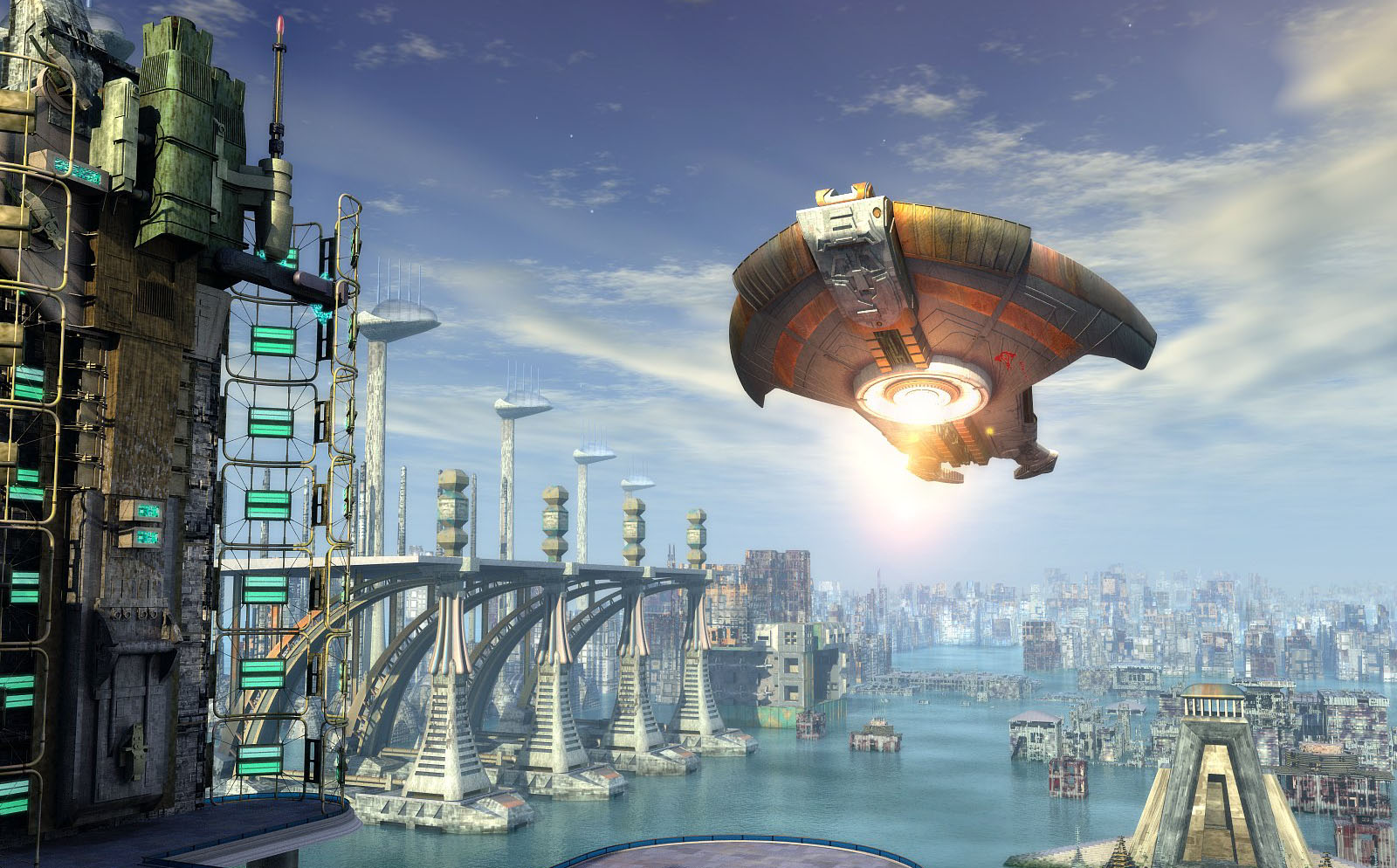
How Science Fiction Shapes the Future of the English Language: Why It Matters for English Language Learners
May 4th (May the fourth) is Star Wars Day, thanks to a pun on its famous phrase: ‘May the force be with you’ (May the fourth be with you)! But you don’t need to know the Star Wars films or franchise to look into your future. Sci-fi (an abbreviation of Science Fiction) and visions of the future play important roles in contemporary English language usage, and The English Studio is here today to help you strengthen the future of your command of the English language.
Where do you see your future, with a greater command of the English language? Science fiction (‘sci-fi’ for short) stretches our imagination with galaxies far, far away and impossible technologies – yet it’s more ‘down-to-earth’ than you may think. Many everyday English words were actually created or popularised in sci-fi stories. For English learners, this means that words born in fantasy books and movies can suddenly become real vocabulary that they encounter. Understanding the connection between science fiction and the English language future helps learners see how English eavolves. It also shows that learning new terms from sci-fi isn’t just fun – it’s practical. And it’s not just sci-fi doing the shaping — English also grows by borrowing words from other cultures. Discover how words from other languages become part of English in our blog post here.
Sci-Fi Origins of Everyday Words
Science fiction has given us brand-new vocabulary. Writers of sci-fi coined terms that later entered common speech. For example, H. G. Wells gave English the phrase “time travel” in the late 1800s. Almost everything on this list has a sci-fi origin:
- Time travel – First used by H. G. Wells in 1895. Today, it describes any journey into the past or future.
- Robotics / robot – The word robot comes from Karel Čapek’s 1920 play U.R. (“Rossum’s Universal Robots”). Asimov later coined the term “robotics” in 1941. We now use both terms in science and industry.
- Zero-G – Popularised by Arthur C. Clarke’s 1950s space novels, “zero gravity” became zero-G when talking about weightlessness in orbit.
- Warp speed – Introduced in 1950s sci-fi and a staple of Star Trek, “warp speed” now means “extremely fast” even outside space travel contexts.
- Droid (Android) – Short for “android,” originally meaning a human-like machine. The 1700s coined android from Greek for “man,” but droid was used in 1950s stories and made famous by Star Wars (think R2-D2).
- Alien – Although “alien” had meant a foreigner, or someone from another place, since the 1300s, its sci-fi meaning (“being from another planet”) only appeared in the late 1920s.
These examples show that many “futuristic” words actually date back decades (or longer). English language learners often use warp speed, robot, or time travel without realising that they originated in sci-fi literature and movies.
When Science Fiction Becomes Language Reality
Many sci-fi terms have crossed over into real life. Writers invented words for imaginary technology – and then we built that tech. For example, William Gibson’s novel Neuromancer (1984) introduced the term “cyberspace”. Now we use cyberspace or cyberworld to talk about the Internet and virtual reality. Similarly, devices that “beam” people around (like Star Trek’s transporter) still belong to fiction – but stories about teleportation inspired ideas like “teleport booths.” In Larry Niven’s 1973 story Flash Crowd, people use phone-booth teleporters, a concept that eventually inspired the modern phrase “flash mob” when mass gatherings happen as a result of texting.
Some everyday tech names even hint at sci-fi roots:
- Robots and AI – The idea of robots comes from sci-fi, but robots and artificial intelligence are now a part of everyday life for some. Asimov’s “Three Laws of Robotics” gave early shape to how we think about robots.
- Teleporter / Teleportation – While true teleporters don’t exist, Star Trek’s transporter coined this idea. We use teleport informally for instant travel (e.g. “The Internet lets you teleport ideas around the globe”).
- Space-travel phrases – Words like zero-G (weightlessness) and warp speed moved from novels into real space and science talk. NASA and astronauts regularly use them.
In summary, when science fiction becomes language reality, learners see that words from stories are not just for fun – they enter real science and tech talk. For example, terms that originated in Star Wars or Star Trek now appear in news headlines about the latest rockets or AI.
The Influence of Science Fiction and the English Language
The influence goes both ways: future technologies will keep feeding new words into English. Just as past sci-fi gave us robot and metaverse, today’s emerging tech inspires tomorrow’s vocabulary. Learners should expect more new terms as we explore AI, virtual worlds, and space. Consider these trends:
- AI and Machine Language – Artificial intelligence is creating new terms like “machine learning”, “deepfake”, and “quantum computing”. Many ideas first appeared in sci-fi novels, such as “singularity” or self-aware AI. As AI assistants (like Siri, Alexa) and chatbots become common, related words will continue to spread in everyday English.
- Virtual Reality and the Metaverse – The word metaverse (today used for 3D virtual worlds) was coined by Neal Stephenson in his 1992 novel Snow Crash. Once fiction, metaverse-type concepts are now business buzzwords. Future VR/AR gadgets have brought new terms like holoportation, neural interface, or omniverse.
- Space and Robotics – With renewed interest in space travel and colonisation, expect more terms from “space opera” to be used literally. Words like terraform (making another planet habitable) or exoplanet were dreamed up by scientists and writers. If humans colonise Mars or deploy planetary robots, related vocabulary will become standard.
- Everyday Smart Tech – Just as “cellphone” emerged after Star Trek communicators, new words inspired by sci-fi have become part of everyday language. For example, biometric passport, smart city, or brain-computer interface have been coined. Sci-fi authors often name these things years before they become reality.
In short, the English language future is being shaped by cutting-edge science and by science fiction. For English language learners, this means staying curious about new tech words. By reading or watching modern sci-fi, learners can get a sneak peek at vocabulary that may soon enter classrooms and workplaces.
Where Sci-Fi Becomes Reality
Many gadgets we use daily started as science fiction dreams. This teaches English language learners that English borrows from fiction to describe reality. A few clear examples:
- Mobile Phones and Communicators – Remember Captain Kirk’s flip communicator on Star Trek? Martin Cooper, who made the first cell phone call in 1973, said Star Trek inspired him. Today, the flip phone and mobile phone are everywhere, making “hello” a universal greeting – a concept popularised on TV.
- Video Calls – Sci-fi imagined video calls long before Zoom. For example, 2001: A Space Odyssey (1968) showed astronauts using tablet-like screens to video-chat. Now video calling is ordinary. English speakers call it video chat, FaceTime, or Zoom, but the idea of a picture-telephone was pure fiction decades ago.
- Tablets and Computers – Star Trek’s LCARS computer interface (touch-screens, voice control) anticipated modern tablets and Siri/Alexa. Apple’s iPad isn’t called a “tricorder,” but its voice assistant and apps recall sci-fi tools. The term “app” is techy, but even “computer” itself was popularised by sci-fi writers talking about future machines.
- Androids (Smartphones) – Funnily enough, modern smartphones (especially those running Android OS) carry a name from sci-fi’s robot stories. Asimov and others imagined androids; now we carry them in our pockets as powerful “android”
- Voice Assistants – Talking computers like HAL from 2001 or C-3PO from Star Wars are fictional, but today’s Alexa and Google Assistant are their real-life descendants. Phrases like “Hey Siri” sound futuristic but are everyday English commands.
These examples show English evolving as fiction turns to fact. For learners, the lesson is: Don’t dismiss sci-fi terms as “not real.” Many sci-fi words become part of normal speech. By recognising this, English language students can better guess the meaning of new words. It also highlights that English is a living language – always adopting new words from technology and culture.
Star Wars Day: “May the Force Be With You” (May 4th)
Science fiction even plays with language for fun! A good example is Star Wars Day, celebrated every year on May 4th. Fans say “May the 4th be with you,” a pun on the famous Star Wars phrase “May the Force be with you.” In Star Wars, “the Force” is a mystical energy that helps the heroes. The phrase “May the Force be with you” basically means “Good luck” or “Stay strong.”
For English language learners, this is a playful way to see how words work. Force here means power or strength (think of a physics force). Saying “May the fourth be with you” replaces Force with fourth (the date), which sound similar. It’s a wordplay pun in English. Learning this shows students how English speakers love puns and pop culture references.
The key takeaway: even a simple holiday greeting has layers of meaning. Understanding “May the Force be with you” helps learners with vocabulary (force = power) and cultural context (knowing Star Wars). It also reinforces that enjoying science fiction can make English more engaging and relatable.
Learning English Is Not Fantasy
Science fiction teaches us that learning English is not fantasy – it’s practical and dynamic. The English Studio can help turn your learning goals into reality. We offer lessons and resources that tap into modern English usage, so you stay ahead of the curve. If new technologies and stories shape our language, staying curious and adaptable is key. Whether you’re a beginner or an advanced learner, let us guide you. The English Studio knows that today’s sci-fi terms could be tomorrow’s everyday words, and we can help you master them. Ready to make your English learning future a reality? Embrace the science fiction in your English studies, and the future of your learning will be all the brighter!
Improve your English Language Skills
Unlock your full potential with The English Studio! Our experienced teachers offer personalised English language training for everyone, helping you to improve your work and to grow your social, business and career opportunities . Find out how our specialised lessons can help you to reach your goals. Call us on +44 20 7299 1700 or email us at [email protected] for more information. You can also complete our online test to check your English level or to meet with our Education Advisors for tailored advice.





Questions? We’re here to help
"*" indicates required fields